A Beginner's Guide to Watch Terminology: Understanding Datejust Chronographs GMT and More
- Totally Watches
- Nov 24, 2025
- 5 min read
Horology loves a fancy word, even when it's just describing a basic function. When you start shopping for a watch, the variety of terms can feel overwhelming. Words like Datejust, Chronograph, and GMT pop up everywhere, but what do they really mean? Let's face it, it seems quite self explanatory in some instances, but you doubt yourself because you're not 'watchy'.
Brands use specific terms to describe features, materials, and styles. Sometimes it’s helpful. Sometimes it’s pure marketing.
Understanding the basics instantly makes buying a watch easier and a much more fun activity.
This guide covers everything from movement types, GMT, Datejust, Oyster Perpetual, and Chronographs, and the words sellers use to make watches sound fancier than they are.
So let's crack on shall we, time's a ticking!

What is a Watch Movement?
Ok, first things first. The watch movement is simply what is making your watch tick.
Automatic: A watch powered by the movement of your wrist, no battery needed.
Quartz: A battery-powered watch known for accuracy and low maintenance.
Mechanical: It will need winding by hand.
What is a Watch Complication?
Despite the dramatic name, a complication is just an extra feature beyond telling the time. Examples:
Date window
Chronograph
GMT hand
However these additional features often require extra parts and can make making the watch a more complex issue - therefore it becomes a more expensive watch.
Not really that complicated is it?
What Datejust Means and Why It Matters
The term Datejust originally comes from Rolex, but it’s now used more broadly to describe watches with a date function that automatically changes at midnight. But you knew that! This feature is practical because it keeps you informed of the date without needing to reset it daily.
How it works: A small window on the dial shows the date, usually at the 3 o’clock position.
Why it’s useful: If you rely on your watch for daily scheduling, a Datejust function saves time and hassle.
What to check: Make sure the date changes precisely at midnight, not gradually over several hours.
Datejust watches often have a clean, classic look, making them versatile for both casual and formal wear. If you want a watch that blends style with everyday functionality, a Datejust is a solid choice.
Understanding Chronographs and Their Uses
A chronograph is a watch with a built-in stopwatch function. It usually has extra sub dials and pushers on the side to start, stop, and reset the timer.
Common features: Seconds, minutes, and sometimes hours counters on sub dials.
Who uses it: Pilots, racers, and sports enthusiasts often rely on chronographs to time events.
What to look for: Smooth operation of the pushers and clear, easy-to-read sub dials.
Chronographs add a sporty, technical look to a watch. Even if you don’t use the stopwatch function daily, many people appreciate the complexity and style it brings.
What Is a Rattrapante / Split-Seconds Chronograph?
This is a fancier chronograph that can time two things at once. It has two stopwatch hands:
They start together
One can “split” to measure a separate time
It then catches back up
Sounds elite, but the idea is very simple.
What Is a Flyback Chronograph?
Instead of:
Stopping the stopwatch
Resetting it
Starting it again
…you press one button and it instantly resets and restarts. Made for pilots, loved by anyone timing repeats.
Is a Chronometer the same as Chronograph?
No. Do not confuse the two.
This is a certification not a feature.
A watch that passed independent strict accuracy tests like COSC, the Official Swiss Chronometer Testing Institute. (Other countries may have other governing bodies)
As a rule watches are tested over several days in different positions at different temperatures, while remaining accurate to within -4/+6 seconds per day for mechanical watches and ±0.07 per day for quartz watches.
What GMT Means and Why It’s Popular
GMT stands for Greenwich Mean Time. (Told you it was pretty basic!)
A GMT watch shows the time in two different time zones at once. It has an extra hour hand that circles the dial once every 24 hours and a rotating bezel marked with 24-hour increments.
Why it’s useful: Perfect for travelers or people who work with international teams.
How to read it: The main hour hand shows local time, while the GMT hand points to a second time zone.
What to check: The GMT hand should be easy to adjust independently from the main time.
GMT watches combine practicality with a distinctive look. They often have bold, colorful bezels that make them stand out.
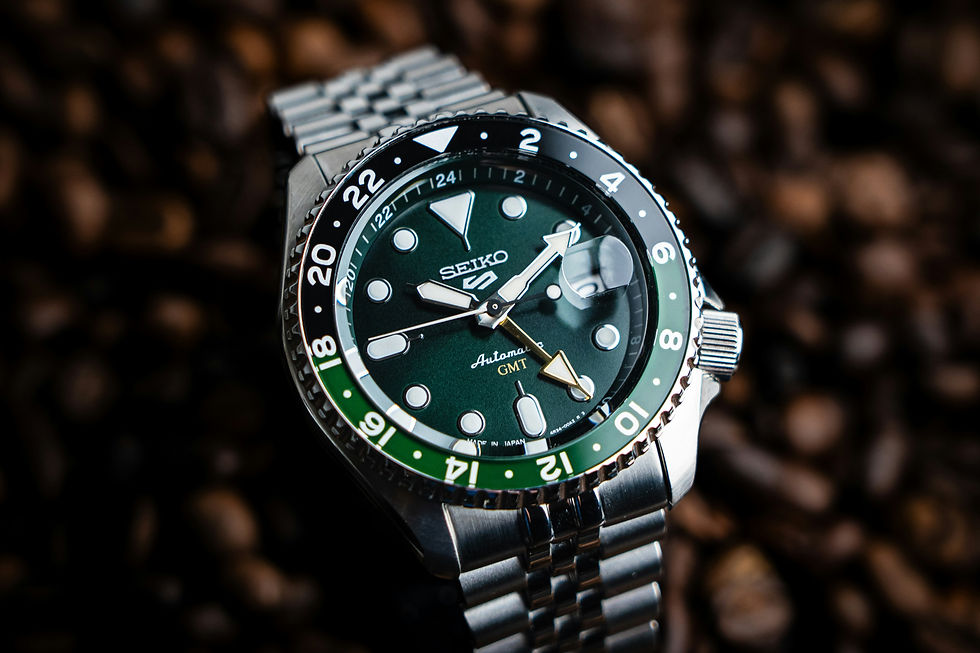
What Is a Bezel?
The ring around the watch face. (See the picture above with the numbers on?) Sometimes it rotates (divers), sometimes it's fixed. A lot of brands hype it up - but it's basically the frame.
What Is a Crystal?
The transparent cover over the dial. Options include:
Sapphire (most scratch resistant)
Mineral glass
Acrylic (soft, easy to polish)
Not actually “crystal,” despite the name.
What Is a Moonphase?
A small display showing the current phase of the moon. It’s decorative, romantic, and completely unnecessary… which is exactly why people love it.
What Is a Tourbillon?
A spinning cage invented to improve accuracy in old pocket watches. Modern wristwatches don’t really need it — but it looks incredible and costs a fortune.
What Is a Power Reserve?
How long the fully wound watch runs before stopping. Think of it as “battery life,” but for mechanical watches. It may be around 40 hours, fancier more expensive watches may run for several days.
What Are Lugs / Lug-to-Lug?
Lugs are the metal bits that hold the strap. Lug-to-lug is the measurement from top lug to bottom — crucial for how the watch fits your wrist.
What Does Water Resistance Actually Mean?
The numbers can be misleading. Quick reality check:
30m / 3ATM – Splash resistant only
50m – Shower or light swim
100m – Swimming/snorkelling
200m+ – Actual diving
They don’t test them to those literal depths — it’s a pressure rating.
What’s a Skeleton or Open-Heart Watch?
Skeleton: Big sections cut away so you can see inside
Open-heart: A small window showing the balance wheel
Both are just ways of saying: “Look at the cool moving bits!”
What Is an Exhibition Caseback?
A transparent back so you can see the movement. Usually sapphire glass. Great for watch nerds.

Brand Terms You’ll See Everywhere (But No One Explains)
Oyster, Perpetual, Datejust, Submariner…
Most brand-specific names boil down to:
Case type
Movement type
Water resistance
Function
For example: What Does “Oyster Perpetual” Mean?
A Rolex phrase that sounds fancier than it is.
Oyster = water-resistant case
Perpetual = automatic (self-winding) movement
Put them together and “Oyster Perpetual” literally means: A water-resistant automatic watch.
They sound grand, but understanding them is easy once you break them down.
What to Look for When Buying a Watch
When you shop for a watch, keep these points in mind:
Purpose: Are you looking for a daily watch, a sports watch, or a dress watch?
Features: Do you want a date function, stopwatch, multiple time zones, or something else?
Movement: Automatic watches offer craftsmanship and tradition, while quartz watches provide precision and convenience.
Style: Consider size, dial design, and strap material to match your taste.
Brand reputation: Some brands are known for specific features or quality levels.

Final Thoughts on Watch Terminology
Now you know the basics hasn't watch shopping become way less intimidating - and a lot more fun! The more you read listings, the more you’ll realise half the fancy words are just simple features being marketed to sound "expensive".
Each term describes a feature that adds value and personality to a watch. When you know what these features do, you can choose a watch that fits your daily needs and style preferences.
Happy Shopping!

Comments